Why Every Neuropathy Treatment You've Tried Has Failed — And the Simple 2-Ingredient Approach a Neurologist Says May Finally Address What They're Missing
You've probably already tried at least one of these: gabapentin, Lyrica, nerve blocks, B vitamins, alpha lipoic acid, acupuncture, capsaicin creams. And yet — the burning continues. The tingling gets worse. The electric shocks at 3am keep waking you up.
A neurologist researcher says there may be a precise scientific reason why some of these treatments don't work long-term for many people. And it may have nothing to do with the severity of your condition, your age, or how long you've had neuropathy. It may have to do with something these treatments don't address.
According to Dr. Kenji Satoh — who spent decades researching nerve degeneration — some standard neuropathy treatments may share a common limitation. They target the pain signal. Not the environment around the damaged nerve. And as long as that underlying environment remains unaddressed, some patients may continue to struggle — regardless of what prescription they take.
Dr. Satoh began researching this question after seeing patients who continued to decline despite access to advanced treatments. That experience drove him to ask: what might these treatments be missing?
What his research explored was a specific factor — one that may interfere with the nerve's environment and potentially limit what treatments can reach. And more importantly, he identified a specific 2-ingredient combination that may help address this factor and support the nerve's own natural processes.
What the research explores: A specific factor may remain in some patients' systems, potentially acting as a barrier that limits what treatments can reach the damaged nerve. It may be like trying to fill a bucket with a hole in the bottom — the treatment goes in, but the underlying issue continues.
What this 2-ingredient approach aims to do differently: It may help address this factor first — potentially allowing the nerve's own natural repair process to function more effectively. This is the mechanism the free video explains in detail.
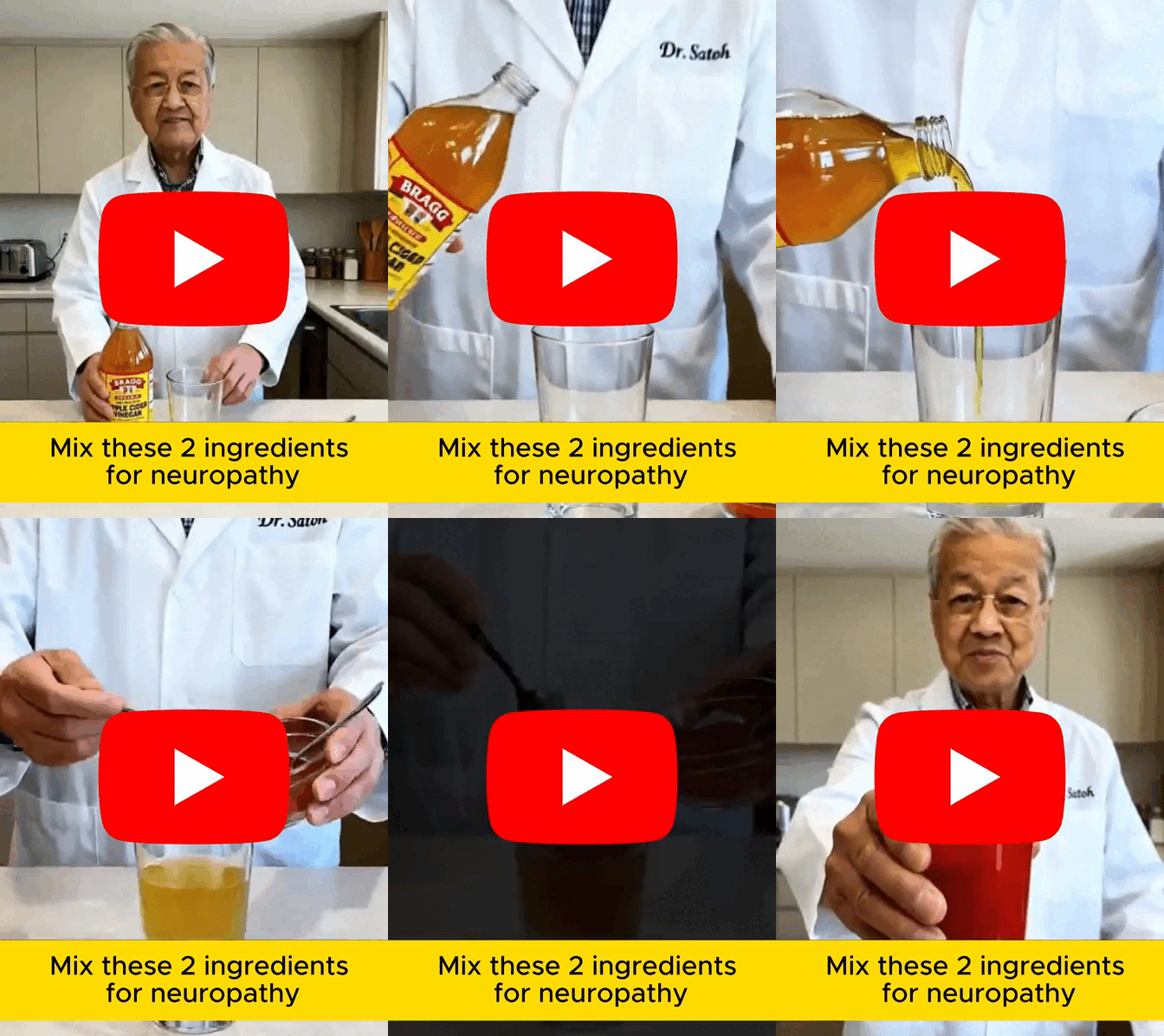
The two ingredients are not exotic or expensive. One of them is a traditional Japanese spice — used for centuries in the mountain regions of Nagano, where neuropathy rates among the elderly have been observed to differ from Western populations. The other is a common pantry staple found in most American kitchens.
Neither ingredient alone may produce the full effect. It is the specific combination — and the ratio — that the research focuses on. Dr. Satoh's clinical observations involved neuropathy patients across multiple causes: diabetic, chemotherapy-induced, and idiopathic. The free video walks through what those observations showed.
Individual experience. Results are not guaranteed and may vary.
Watch the free video to understand:
The mechanism behind why some neuropathy treatments may not work for some people — and what a researcher found instead:
- The possible reason some standard treatments may not work long-term for some patients — and why it may have nothing to do with severity
- The specific factor that may limit what treatments can reach the damaged nerve — and the 2-ingredient approach that may help address it
- Why neuropathy patients in Japan may respond differently to certain approaches — and the daily practice behind that observation
- The exact 2 ingredients — one traditional Japanese spice and one common pantry staple — and the ratio the research focuses on
- What was observed in clinical settings over an 8-week period — individual results vary
- Why the second ingredient — already in most American kitchens — may be the key that makes the first one more effective
- How to learn more about this approach at home — regardless of what treatments you've already tried
The free presentation walks you through the proposed mechanism — why this factor exists, how it may limit treatment, and why this specific 2-ingredient combination may address what standard treatments have been missing.
▶ WATCH THE FREE VIDEO NOWI had tried 5 different treatments over 6 years. Gabapentin, Lyrica, nerve blocks, acupuncture, B12 injections. When Dr. Satoh explained the mechanism — why some treatments may be targeting the pain signal without addressing what's around the nerve — it was the first explanation that made sense to me as to why the pattern I was experiencing kept repeating. Watch the video that explained it →
My doctor kept adjusting my gabapentin dose every few months. At some point I started wondering why the dose kept needing to change. Dr. Satoh's explanation of the underlying mechanism — why some treatments may not be addressing a key factor — was the first thing that gave me a framework for understanding what I was experiencing.
I had been on several neuropathy treatments simultaneously. The comparison in the video between how standard treatments work versus what mechanism this 2-ingredient approach targets — that's what finally made the scientific difference clear to me. I hadn't understood that distinction before. See what Dr. Satoh explained →
I had spent a significant amount on neuropathy treatments over several years. When I understood the mechanism Dr. Satoh explains — why some treatments focus on pain signals rather than the nerve environment — it gave me a different way of thinking about what I had been trying.
What stood out to me was the scientific explanation — not a personal story, but the proposed biological mechanism for why the nerve environment may limit what treatments can reach. That was the part no other video or doctor had walked me through before.
